


Tokenization of Singapore government bonds: new opportunities for fintech businesses
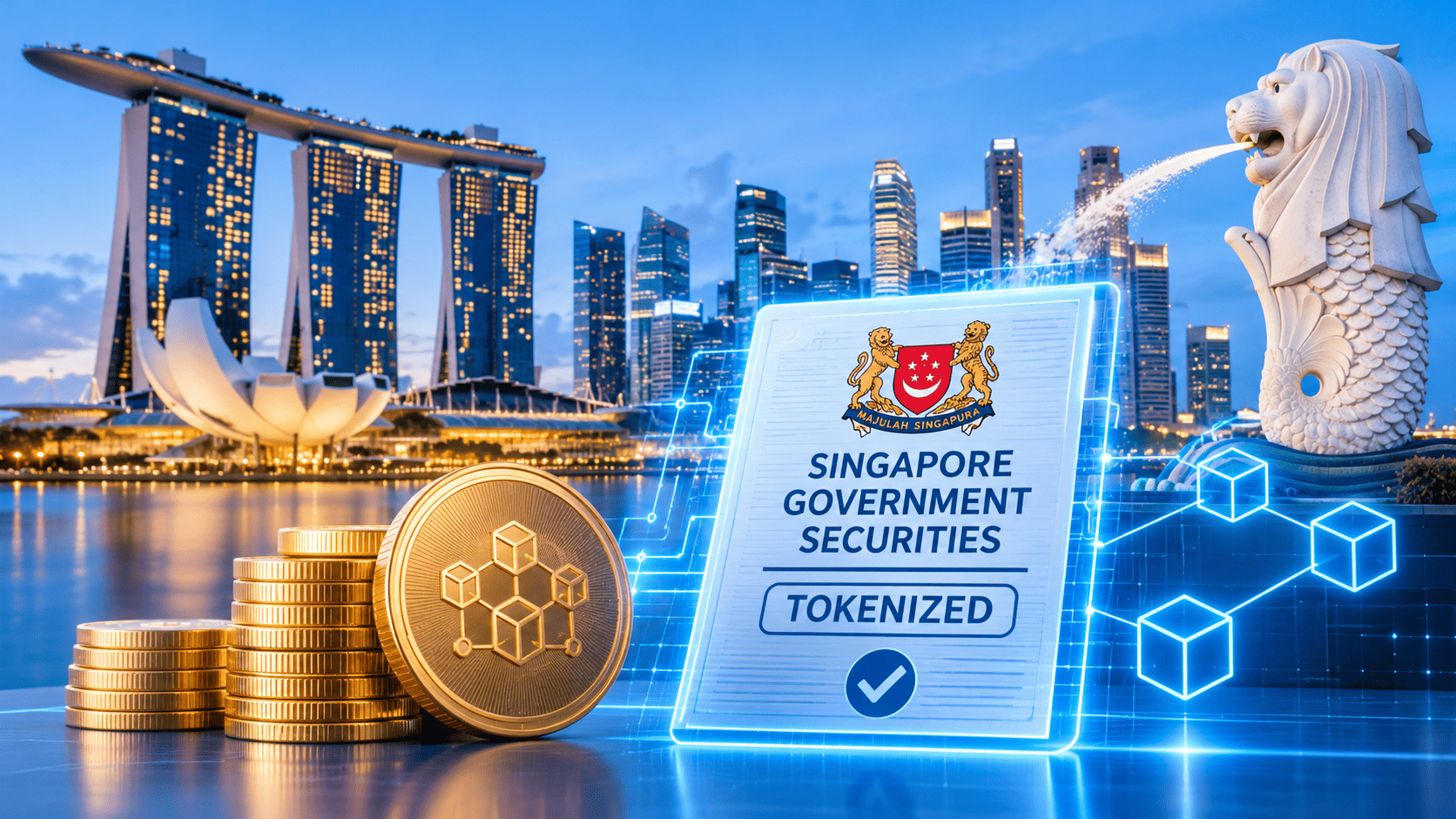
Singapore continues to strengthen its position as one of the world’s leading hubs for financial technology. In November 2026, the Monetary Authority of Singapore (MAS) announced the development of a framework for tokenized government securities. This initiative aims to integrate blockchain technology into traditional financial instruments and establish a more efficient infrastructure for international settlements.
A significant milestone was the issuance of tokenized government treasury bills totaling 100 million Singapore dollars. This project demonstrates the practical application of digital assets within a regulated financial system and opens up new opportunities for banks, investment firms, and fintech companies.
What are tokenized government securities?
Tokenization involves converting the rights to traditional financial assets into a digital format using distributed ledger technology (DLT). In this context, government securities are represented as digital tokens, which signify the holders' rights to the underlying financial instruments.
This model enables the automation of various stages—from issuance and record-keeping to the transfer of assets. Instead of relying on multiple, disconnected systems, market participants can operate within a unified digital infrastructure.
Crucially, these tokenized securities retain the economic essence of traditional government obligations. It is the technology used for recording and trading them that changes, not the fundamental nature of the financial instrument itself.
How Singapore’s new financial infrastructure works
The MAS initiative involves using digital technologies not only for the issuance of securities but also for facilitating settlements between financial institutions.
Particular emphasis is placed on the use of central bank digital currency (CBDC) to settle transactions involving tokenized assets. This allows for the exploration of near-instantaneous transaction finality, reducing reliance on traditional, multi-stage settlement processes. For international financial business, such infrastructure potentially translates into lower operational costs, greater transaction transparency, and faster capital movement between market participants.
Opportunities for International Companies
The development of tokenized financial instruments could impact several categories of organizations:
- Fintech companies will be able to develop solutions for digital payments, as well as the storage and management of financial assets.
- Investment firms will gain access to additional technological tools for handling tokenized securities.
- Banks and payment institutions will be able to integrate new settlement mechanisms into their corporate financial services.
- Cryptocurrency projects will have the opportunity to develop infrastructure for interacting with the traditional financial sector.
The Singaporean initiative is also boosting interest among international entrepreneurs in registering companies within jurisdictions that have well-developed regulations for digital finance.
MAS Plans for 2027
The regulator intends to expand the issuance of tokenized promissory notes, bring in additional financial institutions, and test the use of digital tools for managing collateral in credit and other financial transactions.
The existing "Singapore Dollar Test Network" will be transformed into the "SG Digital Ledger." This is intended to serve as a common platform for settlements between financial institutions, digital assets, and various financial networks.
It should be noted that the current focus is on developing institutional infrastructure and conducting practical trials, rather than on the unrestricted circulation of tokenized securities among retail investors.
Prospects for International Business and How IT-OFFSHORE Can Help
The growth of tokenized assets enhances Singapore’s appeal to companies operating in fintech, digital payments, investment services, and blockchain development. However, entering this market requires compliance with local requirements regarding licensing, corporate governance, and financial oversight. IT-OFFSHORE assists entrepreneurs in selecting a suitable jurisdiction, registering an international company, navigating the requirements for financial and cryptocurrency-related activities, identifying appropriate licensing solutions, and arranging the opening of corporate bank or payment accounts.


